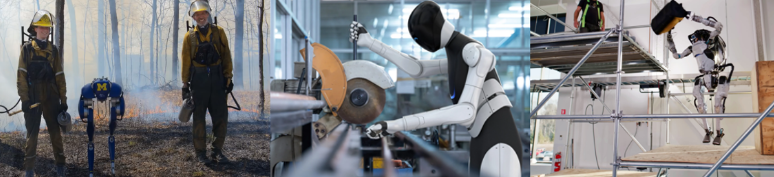


High-fidelity simulation has become essential in robotics research, particularly for humanoid robots where real-world testing can be slow, risky, and costly. MuJoCo (Multi-Joint dynamics with Contact) provides a lightweight, physics-based simulation platform designed for robotics, biomechanics, and reinforcement learning research.
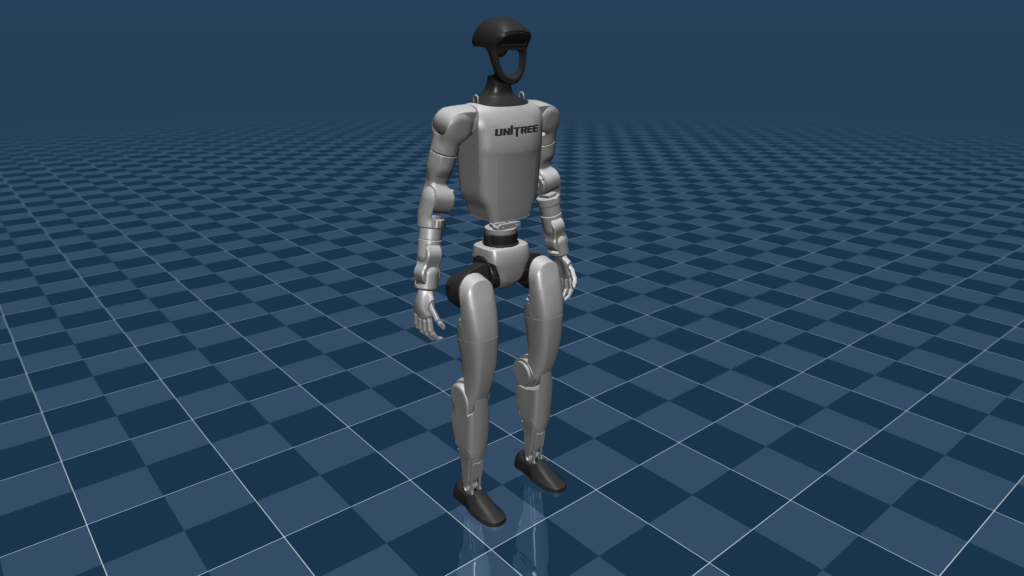
MuJoCo is a physics engine specifically optimized for fast and accurate simulation of complex robotic systems. It supports multi-body dynamics, soft contacts, and actuator models, enabling researchers to simulate humanoid robots with realistic interactions and joint-level control. MuJoCo’s core features include:
- Continuous-time physics simulation with accurate contact modeling
- Efficient computation suitable for reinforcement learning and control optimization
- Flexible model description using XML or MJCF formats
- Compatibility with Python through the
mujoco-pybindings for easy integration with modern AI frameworks
Its speed and flexibility make MuJoCo a popular choice for researchers developing humanoid locomotion, manipulation, and whole-body control policies.
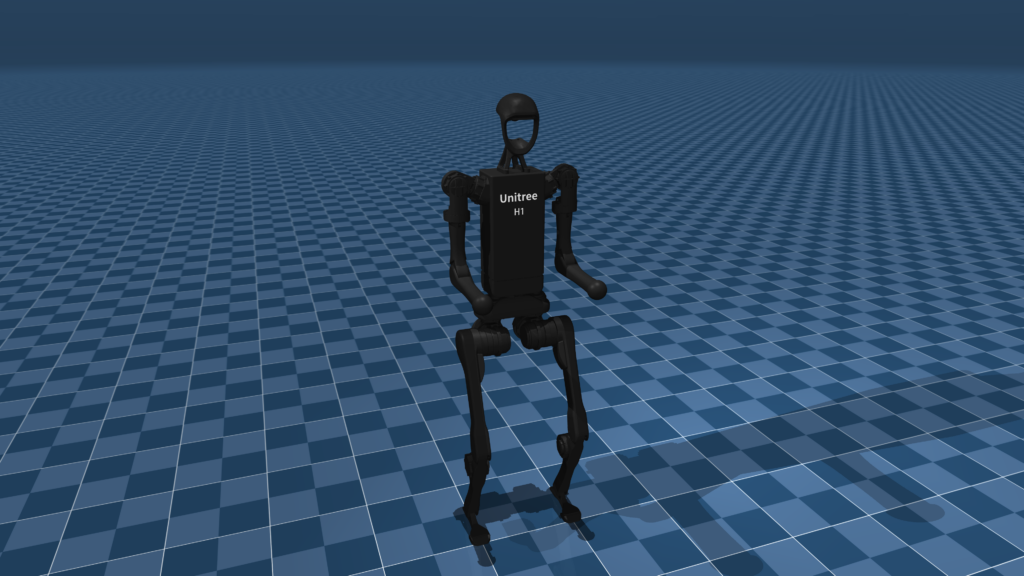
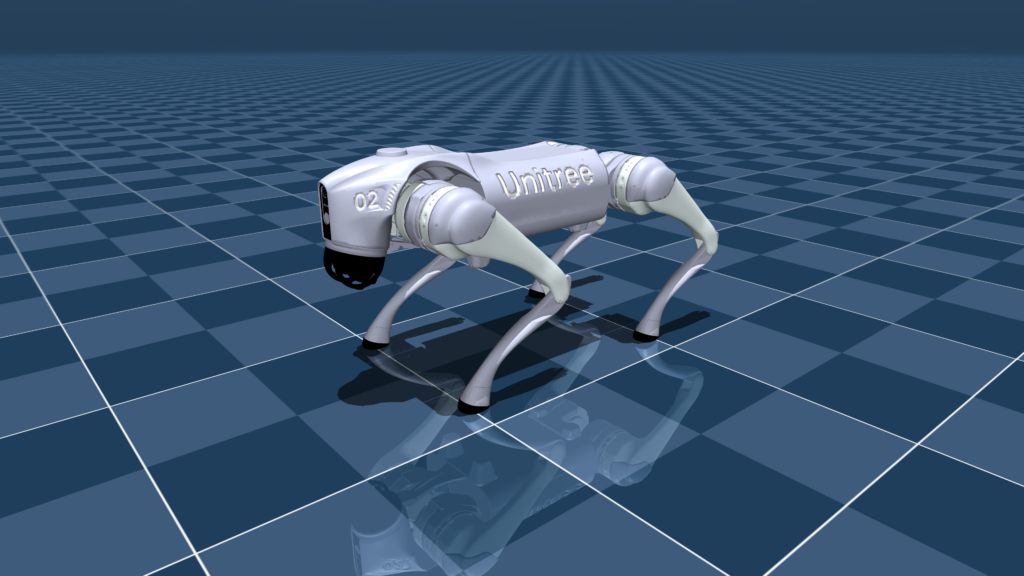
Where MuJoCo Fits in the Research Pipeline
MuJoCo is widely used in reinforcement learning, control optimization, and biomechanics research. It allows researchers to test control algorithms in simulation before deploying on real hardware. Popular humanoid and multi-joint benchmarks such as Humanoid-v4, Ant-v4, and Walker2d-v4 in OpenAI Gym rely on MuJoCo for simulation fidelity. The combination of accurate dynamics and fast computation supports both model-based and model-free learning approaches, enabling large-scale experiments that would be impractical on real robots.
Researchers can combine MuJoCo with Gym environments, RL frameworks such as Stable Baselines3 or RLlib, and ROS-based control stacks to create scalable humanoid robotics experiments.
MuJoCo continues to be a key tool for humanoid robotics and reinforcement learning research, providing a lightweight, fast, and accurate platform for physics-based simulation. Its flexibility in modeling complex multi-joint systems, combined with Python APIs and integration with standard benchmarks, makes it ideal for testing control algorithms, learning locomotion policies, and exploring new robotic designs before deployment on physical hardware. Researchers can begin using MuJoCo through the official GitHub repository and leverage its rich ecosystem for high-fidelity simulations and scalable experiments.